About Coachella Valley Model Railroaders
Our Model Railroad Display
Our Beginnings
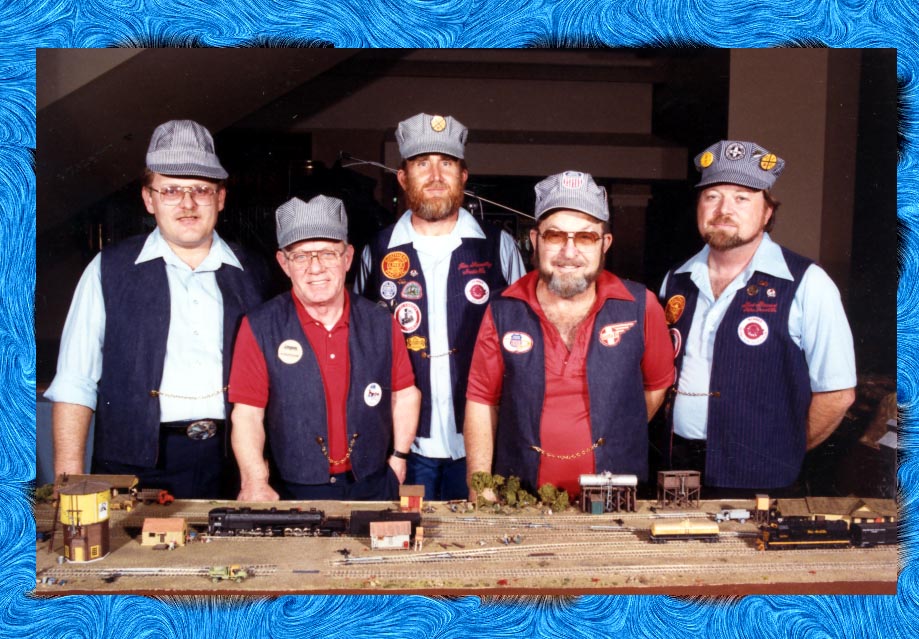
The Display That Sparked a Community
In 1984, two of our two founding members pooled their financial resources and began constructing a model railroad display to commemorate the 50th anniversary of the National Model Railroad Association. This display was placed in the Westfield Mall (formerly Palm Desert Town Center Shopping Mall) for a two-day show. From this model railroad display, they met additional people with the same interests in model railroading.
Forming a Model Train Club
In 1985, five model railroaders who wanted to share their knowledge and experiences formed an informal group that would eventually become known as the Coachella Valley Model Railroaders. At the time, the main purpose of the group was to help fellow members in the construction of their home layouts.
Once a week, they would meet up and work on a member’s home layout for the price of coffee and cookies. The host member would hear the sounds of drills and saws as his layout quickly grew before his eyes. However, their meetups were not all work. The club members would always find time to admire a new steam locomotive or a weathered boxcar together.
Our Club's First Real Project and Membership Growth
Coachella Valley Model Railroaders’s first real project as a model train club was to build a modular layout to be displayed and run at the Westfield Mall. This first project was finished on time. With the diligent efforts of the members in keeping the display operational throughout the Christmas season, the club’s first model railroad display was well received by mall customers. This showing introduced and connected the club to other desert modelers, and the membership began to grow.
Further Developing Our Modular Model Railroad Display
The club members continued helping fellow members build their home layouts. They also worked on expanding the club’s modular railroad so that Christmas shoppers at the Westfield Mall were greeted by an ever-larger, more detailed operating railroad each year.
Moving to the Riverside County Fair and National Date Festival Fairgrounds
In 1989, an agreement was reached with the Riverside County Fair and National Date Festival to include our model railroad layout as an exhibit. After the show at the Westfield Mall, we moved our model railroad layout to the Riverside County Fair and National Date Festival Fairgrounds. We installed it in the north end of the Crafts and Hobbies building (formerly Home Arts Building). The modules were further expanded so that the layout ran the full width of the building’s north wall and 20 feet down the west wall.
The exhibit was a great success, and the club received many compliments from both the viewing public and the fair personnel. Because of this first fair exhibit, Coachella Valley Model Railroaders and our model railroad display gained a home year-round in the Crafts and Hobbies building.
Turning a Modular Layout Into a Permanent Railroad Showcase
The club’s first months in our new home felt like total mayhem as our members dismantled the old modular layout and constructed a new, larger permanent railroad in the center of the north end of the Crafts and Hobbies building. Building this layout was unusual since we had each member choose a piece of the layout and erect what they wished in that area.
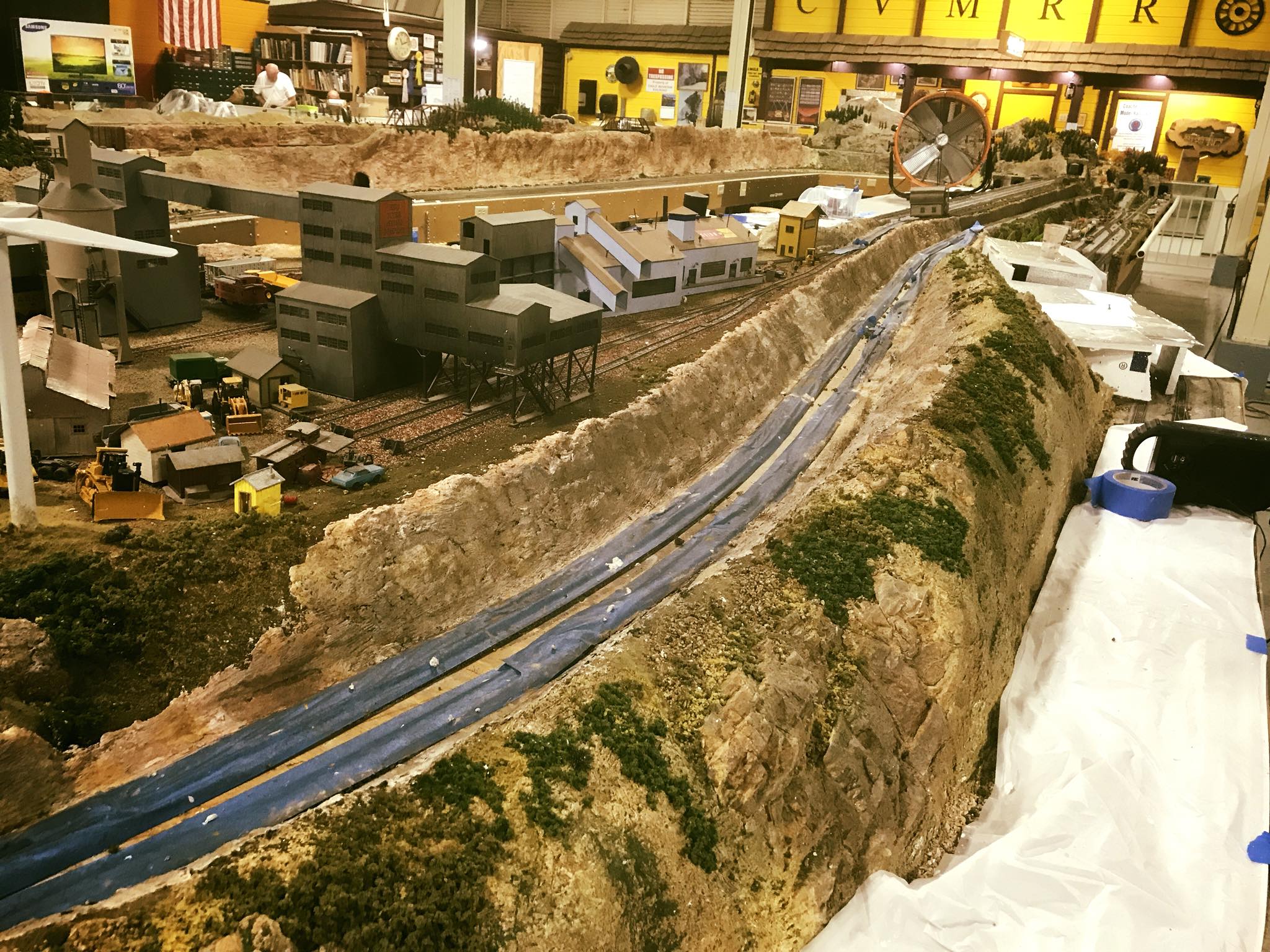
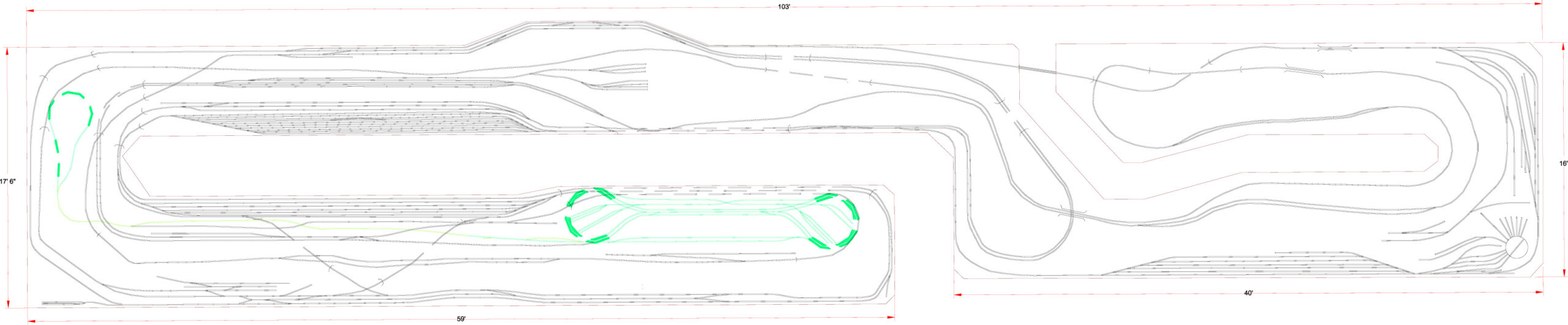
So, our permanent model railroad display became like a three-ring circus, complete with a sideshow on one end and an elaborate industrial switching yard on the other. It had several yards, siding, towns, and villages scattered in between, with vast canyons spanned by mighty bridges connecting them all. For the first season of our new model railroad display, we ran what is called a double-dogleg layout around the large U-shape that was built. A good operator could keep up to five trains going at once as long as they all went in the same direction.
Expanding Our Permanent Model Railroad Display and Inspiring New Visitors
Coachella Valley Model Railroaders is anything but static. We are always expanding and growing our main model railroad layout with new additions, such as DCC. One of the greatest changes we made was redesigning the track to allow two-way running.
Every year, our model railroad display has new things in place to entice visitors to come and see us. It works, and many visitors do stop by. Oftentimes, it may be an old gentleman and his wife from whom the layout elicits a fond memory of some long-past job or pleasure. The club has become one of the main attractions during the fair. We even have question-and-answer sheets that sometimes put our members to the test.
Club Membership
Our model train club currently has 44 regular members from all occupations, ranging from retirees, swimming pool contractors, carpenters, electricians, and law enforcement to engineers, doctors, photographers, pilots, and so on.
All Is Welcome
Club membership is open to anyone with an active interest in railroads and modeling. The level of experience ranges from armchair modelers to novices to experts. For most of us, the fun is in the learning.
Membership Fees and Requirements
For a limited time, new members can join our model train club for only $75 for the first year and get the one-time membership fee waived. To become a regular member, you must:
- Be at Least 18 Years of Age
- Complete a Membership Application
- Complete a Four-Month Probationary Period
- Be Approved by the Members
Member Guidelines
Uphold Our Fairground Commitment:
Run trains, enjoy the model train club camaraderie, and contribute to our fairground commitment: to maintain the cleanliness and appearance of our building and restroom, which is a reasonable requirement considering what we get in return.
Prep Your Model Train Equipment Before Hitting the Rails:
Check your engines and rolling stock before you place them on the model railroad layout. This means couplers and clean wheels for your engines and rolling stock. Dirty wheels cause dirty tracks and DCC problems. If you have operating issues, please remove your equipment so that others can continue operating while you use the workbench to correct your problem.
Follow Our Model Train Club’s Last Car Rules:
The last car in a consist should have an EOT indicator, a lighted car, or resistance wheels so that our track detection will see it.
Check and Update the Engine Dispatch Board Before and After Your Turn:
To avoid locomotive address conflicts, check the Engine Dispatch Board located in the workbench area to ensure that your locomotive’s address is not being used. Then, list your name and your locomotive’s address on the board. Before leaving, remove your information from the board.
Keep Food and Drinks Away from Our Model Railroad Layout:
No food or drinks inside the model railroad layout. Spills do happen, which can cause problems on the model railroad layout. Please keep the model railroad layout clean.
Power Down the Yard Lead Before Moving Trains:
Before placing your train on or removing it from the model railroad layout, make certain that the yard’s lead-track power is off. With power on, a system short can occur, which is no big deal. However, that system short could also foul up your engine’s decoder, which is a very big deal.
Stay Alert and Communicate When Using the Tracks:
Be aware of the trains ahead of and behind yours. If you use a turnout, return it to the original position when clear. If you inadvertently stop on the mainline, advise those behind you.
Use the Turnout Controls with Care:
Use the spring-loaded, three-position toggle switches for turnout control whenever available, but use momentary contact only. Holding a switch against the return spring will burn out the motor. Never flick the turnouts with a finger in order to move them. Our turnout motors are being replaced, and they will be controlled by two-position, unsprung switches that will eliminate this problem. So, if you feel spring pressure when you move a toggle switch, let go when it reaches the fully displaced position.
Report Layout Damage So It Can Be Fixed:
If you inadvertently break something on the model railroad layout and cannot fix it yourself, tell a board member so that it can be fixed. No harm, no foul; it does happen.
Fix Problem Trains at the Workbench:
If your train has a problem, take it to the workbench and fix it or reprogram it. If you need help, it’s free for the asking.
Dispatch Your Train When You’re Done:
When you’ve finished running a train, it’s important that you dispatch it (remove it from the system’s command station). While the locomotive’s address and speed are displayed, set the speed to zero and press the “EXIT” key to remove the address from your throttle and the system.
Ref: Digitrax DT 402 Throttle Instruction Sheet.
Digitrax.com has the latest version of all its instruction sheets and manuals.
Dispose of Drink Liquids Properly:
If your drink cup contains liquid and/or ice, please don’t empty it into our trash bins. The liquid will seep out and make a mess. Pour the liquid and/or ice into our sink or outside on the grass before you throw your cup away.
Use the Designated Wheel Cleaning Stations:
Only use the wheel cleaning stations located at the workbench for wheel cleaning.
Follow Our Model Train Club’s Coupler Standards:
Our coupler standards are Kadee-type couplers set to NMRA standards.
Follow Our Model Train Club’s Wheel Standards:
All wheels should be metal wheels.
Run Consists in the Right Order:
Lightweight cars should always follow heavy cars, not precede them. When on curves, the drag from heavy cars may cause the light cars to derail and/or break couplers.
Use Yard Tracks for Breaks, Not Passing Tracks:
When taking a break, leave your train on a yard track. Do not park it on a passing track when you’re on a break.
Be Considerate of Others:
When several members are operating trains —during an open house or the fair, for example — be considerate of others and do not set out more than one train so that yard tracks are available to other members when needed.
Follow Proper Operating Procedures to Avoid DCC Problems:
The DCC can play wicked tricks when proper operating procedures are not followed. Someone may be setting up their train on a yard track, but the throttle is activated, the engine does not move, nor do the lights, horn, or whistle work. Because of this, they may ask for help and will be told to put their locomotive on the workbench’s programming track and reset the decoder to the factory default address, 03.
When they do that, their locomotive will now work, but they must reprogram the locomotive’s address and customized CVs, which is a time-consuming task. Hopefully, they kept a record of their CV settings. In the preceding situation, the operator didn’t hear someone yell, “Short,” during their setup, and the problem happened because they did not ensure that the yard track’s power was off. That short confused their locomotive’s decoder, which immediately played dead.
Follow the Train Schedule:
During the fair, run your train when scheduled to do so. You can visit the fairgrounds when you are not scheduled at the model train club.
Use the Designated Break Area:
If taking a food break, use the table and chairs on the upper balcony.
Enjoy Yourself:
Our model train club’s most important rule is for its members to have fun. Model railroading is the world’s greatest hobby, and we are truly fortunate to have this facility to do it in.
Club Meetings
Located in the Crafts and Hobbies Building of Riverside County Fair and National Date Festival Fairgrounds, our model train club meets most Wednesdays from 2 PM–6 PM and Saturdays from 10 AM–2 PM. Visitors are always welcome at any meeting or session night. You must contact us in advance for access, as the fairgrounds have a security gate you will need to get through.
Annual Membership Meetings
We hold our annual membership meeting and election of officers on the first Wednesday in December.
Minutes of the Meeting
2025 Meeting Minutes
Bylaws
Our model train club has formal bylaws and elected officers, but we work to keep a more relaxed atmosphere.
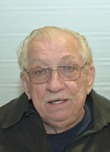
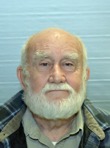
Our Model Train Club Officers
Getting Started in the Hobby of Model Railroading
Diving into the hobby of model railroading can be exciting, but it may also feel like there is a lot to learn. Fortunately, there are many helpful resources available, including magazines, videos, and how-to books dedicated to model railroading. You can find these materials at most hobby stores. Visiting a hobby shop that specializes in model railroading is also a great way to explore your options and see what tools, trains, and layout ideas are available. You will be amazed at what you can find.
Learn by Doing
The best way to begin model railroading is to jump in and start building. Hands-on experience helps you learn faster and gain confidence as you go. Joining a model train club can also make the process easier by giving you the chance to learn from the experiences of others who already enjoy the hobby.
A Hobby for the Whole Family
Model railroading is a hobby for the whole family. It can be enjoyed at home or as a member of a model train club.
Contact Information
Club Address and Layout Location
Crafts and Hobbies Building, Riverside County Fair and National Date Festival Fairgrounds
82-503 Highway 111
Indio, CA 92201-5633
Mailing Address
Coachella Valley Model Railroaders
43714 Commanche Street
Indio, CA 92203-2630
Hours of Operation
Wednesdays from 2 PM–6 PM and Saturdays from 10 AM–2 PM | Other Days and Times Are by Appointment
We are closed for visitation from June 1st to October 1st.