
Invaluable Model Railroading Resources
At Coachella Valley Model Railroaders, we love to share helpful model railroading resources for hobbyists, visitors, and anyone interested in learning more about model trains, layout construction, and railroad display design. Model railroading is a hands-on hobby with many parts, making it suitable for people of all ages and skill levels. Whether your interests lean toward history, construction, scenery, electrical work, or artistic design, there is a place for you to learn and participate.
Delving Into the Hobby of Model Railroading
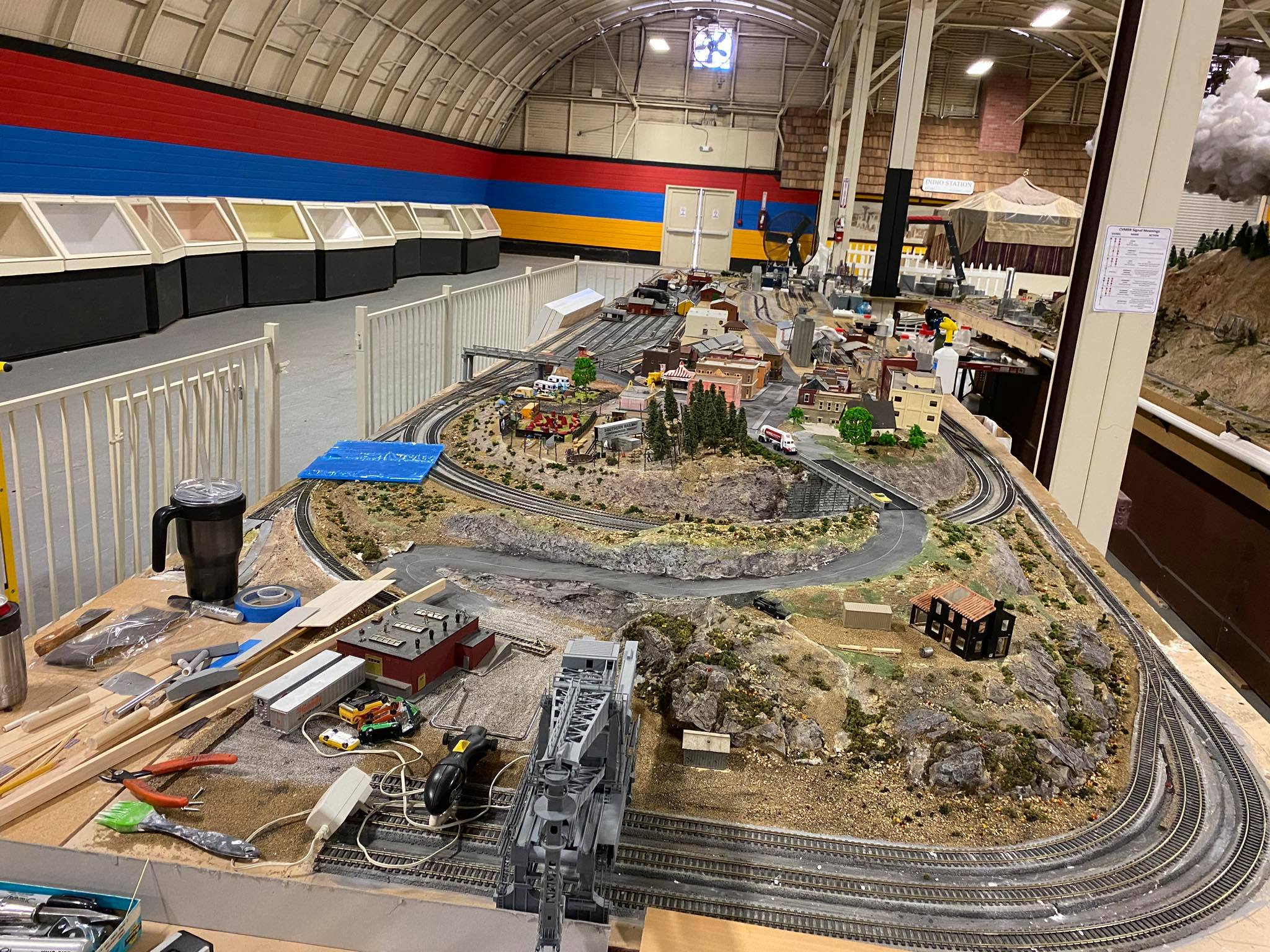
Delving into the hobby of model railroading can be both enjoyable and educational. Enthusiasts can learn useful construction and carpentry skills as they build the benchwork and track layout. Artistic and electrical skills also come into play in the process of designing and building the model railroad display’s topography, structures, and scenery.
Understanding Scale and Gauge in Model Trains
Scale and gauge are often among the first considerations for anyone just beginning to dabble in the hobby of model railroading. “Scale” refers to the measurement ratio between a model locomotive and its full-sized counterpart. “Gauge” refers to the distance between the rails on the track. These two elements correspond directly with each other.
HO scale and gauge are commonly used by hobbyists because they are large enough to show intricate details while still being practical for home layouts. Meanwhile, N scale and gauge are smaller than HO and may be a good option for those with limited layout space.
Supplying Power to Your Model Train Layout
Providing power to your model train track is a fundamental part of layout construction. A simple track may operate well with direct current wiring. As a layout grows more complex, the power supply may need to grow to accommodate the expanded tracks. Multiple electrical blocks allow switching between different power packs so that more than one train can operate on the layout. For larger layouts, many model railroaders use digital command control to manage multiple trains independently and simultaneously.
Elevating Your Model Railroad Display's Topography and Scenery
The topography and scenery surrounding the train tracks are essential to creating a realistic model railroad display. Fields, mountains, rivers, trees, and structures help shape the layout’s environment. Model railroaders have many options when designing and creating scenery.
Although this aspect of model railroading may seem complex, the materials and tools for topography and scenery are quite basic in nature. Foam insulation sheets are often used as a foundation for scenery, while adhesives and paint help create grass, foliage, dirt, buildings, and other features.
Explore More Model Railroading Resources
Use the model railroading resources below to explore construction methods, layout options, scenery ideas, and beyond as you continue learning about the hobby of model railroading:
- “Building a Stub Switch Using a Fast Tracks Assembly Fixture” (PDF): Learn about building a stub switch, a turnout style commonly associated with older railroad eras. This type of turnout does not use moving switchpoints.
- “Building Model Railroad Topography and Scenery with Foam Board” (PDF): Explore how foam board can be used to create model railroad scenery and topography. This material comes in large sheets and can be cut to fit different layout construction needs.
- “Building Your Model Railway: Epochs” (PDF): Understand how railroad eras affect layout realism and accuracy. To create an authentic model railway, model railroaders should consider which locomotives operated during specific time periods and avoid mixing trains from unrelated eras.
- “Classic Model Railroad Tips”: Communications for Model Railroads (PDF): Check out the different methods of communication for the locomotives and sidings that you can use based on the era of your chosen model railway layout.
- “Dave Frary’s Nantucket Project” (PDF): View photos and details about a model railroad display created for the Nantucket Historical Association.
- “Designing Small Shelf Layouts for Operating Fun” (PDF): Discover why small shelf layouts are a practical option for many model railroaders. These layouts work well in limited spaces and can often be completed in less time.
- “Model Railroad Engineer — Civil Certificate” (PDF): Learn more about developing model railroading skills and knowledge. This model railroading resource also notes how joining clubs, such as the National Model Railroad Association, can support hobbyists as they build experience and expertise.
- “Scottsdale Model Railroad Historical Society” (PDF): Explore the possibilities of model railroading with the story of a railroad park in Arizona.
- “Standards & Recommended Practices for HO Modules” (PDF): Review standards and practices for building HO modules. A module is an individual section of a structure designed to connect with other sections to form a full model railroad layout.
- “Track-Laying Tips and Techniques” (PDF): Get familiar with model railroad terminology, which is an important first step for anyone delving into the hobby of model railroading.
- “Using Computer Power Supplies on Model Railroads” (PDF): Learn how a computer can supply power to a model railroad layout’s moving trains, tracks, building lights, and operating switches.
- “Virtual Railroading” (PDF): See how computer-aided design has expanded model railroad layout planning beyond pencil and paper, giving hobbyists a digital way to plan model railroad layouts better.